Thursday, March 29, 2012

Commercial Driver's License - What Are They and What You Need To Know About Getting One

When is a Commercial Driver's License Required
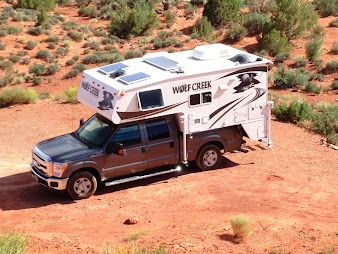
A commercial driver's license requirement is based solely on the weight of the truck, for example a bucket truck or semi truck. This is called the GVW or 'Gross Vehicle Weight'. If your truck has a GVW of more than 26,000, then the driver of the truck will be required to have a CDL. This is the federal requirement. However, if you are traveling across the country, check with each state's laws to make sure they haven't additionally added more stringent stipulations. If you don't follow particular state guidelines, you can be fined a significant amount of money, or worse. You should be able to check with the DMV or DOT of any state to find out their specific requirements.
Whenever you are planning to purchase a large truck, make sure you find out the GVW and if there is a CDL required to drive it before you buy. Hopefully you now have a good understanding of what it means when you hear a utility vehicle is "under CDL".
How to Obtain a Commercial Driver's License
First, you need to know there are three classes of CDLs; Class A, Class B and Class C. Simple enough.
Class A - This class is for a combination of vehicles, for example, if you are towing a car behind a utility drive. If the combination of both vehicles is 26,001 pounds or more, you will be required to have a Class A CDL.
Class B - This class is for heavy straight vehicles. The most common license, if you are going to drive a vehicle 26,001 pounds or more, you're required to have a Class B CDL
Class C - This is for small vehicles, any single vehicle or a combination of vehicles, that doesn't fit into the above two classes. For example, if the vehicle is designed to transport 16 or more passengers, such as a school bus, or if the vehicle is used to transport hazardous materials, the driver would be required to have a Class C CDL
Now, how do you get a CDL?
There is a series of tests you will have to pass. That includes a test based on your knowledge and, additionally, a test based on your skill set of operation. It is basically just like when you get your regular driver's license, but on a much larger scale. Anyone can drive a car, but you have to be skilled to drive a heavy truck.
The type of knowledge test you will take will depend on the class of license you are going for, as well as they type of vehicle you will be planning to drive. Here are a few examples of knowledge test you could take:
General Knowledge - Everyone applying for a CDL will take this general knowledge test.
Passenger Transport - This is a test taken by anyone who is going for their license to drive a bus.
School Bus Test - Obviously, this test is taken by folks who are applying to drive school buses.
Air Brakes Test - A special test required for people who are driving any truck equipped with air brakes such as a semi.
Combination Vehicles Test - This is a test for people who are specifically going to be driving vehicles and additionally towing vehicles behind them.
Hazardous Materials Test - Another obvious one, this test is given to drivers who will be transporting hazardous materials.
I hope the information I've provided here has given you some insight into all the aspects of commercial driver's licenses. Now you can go get one and know what to expect.

Thursday, March 22, 2012

Armed Forces Used Car Buying Guide

Buying a second hand car can be a great choice as it allows you to save money in the knowledge that someone else has paid for the early years of vehicle depreciation. What's more, as cars have become increasingly reliable over the years and engines have greater longevity, many second hand cars are barely run in by the time they are placed on the used car market.
However, when you decide that you wish to take the used car route to buying a new car for yourself, you'll want to make sure that you're getting not just a top quality but also value-for-money from a reputable dealer. While cars have improved beyond all recognition over the years, there are still dodgy car dealers around!
So the first point in our used car buying guide for the military is that you should carefully think about what you can afford to spend and whether you want to purchase the car outright or buy one using a finance agreement. Historically, finance has been difficult to arrange if you are a member of the military, especially if you are living on a military base or are not on the voters role. But nowadays special finance packages are available that usually overcome this problem and allow military personnel to buy the car they want as easily as any person on civvy street.
Getting car insurance used to present a problem for military personnel, but insurance is available nowadays from firms that understand the military lifestyle and this even extends to insurance deals that provide laid up cover while you are on tour.
So, now you know that financing and insuring your new car is unlikely to present you with any difficulties, you can enjoy yourself shortlisting the make and model of cars that will suit your lifestyle. Take time to read reviews of the cars you are interested in on websites and the motoring press. Also take special note of owner reviews on car forums to find out if there are any long-term problems with car ownership with specific vehicles.
The final step is to find a used car dealer who understands the needs of the military and can provide you with a package that will take care of financing if you need it and insurance. They should be able to provide you with a wide choice of vehicles that have been subjected to a comprehensive check and provide you with an extended warranty for your peace of mind.
Together, these benefits really do make buying a new used car if you are in the military an enjoyable and stress-free experience.

Friday, March 16, 2012

Distracted Driving From Outside the Lines

The recent U.S. Department of Transportation (DOT) release of its guidelines on the topic of driver distraction has spurred a good deal of discussion in the media. The guidelines call for automakers to disable applications that allow drivers to manually access social media, surf the Web or send text messages while on the road.
All when and good. Very, very good in fact. Really, do we want drivers web surfing or reading text messages while driving?
But all of the attention is on infotainment systems. This focus on distracted driving as an opportunity to reexamine how vehicles communicate with drivers in general. Today's advanced vehicles are in one form or another continually talking to drivers, either with warning lights and tell-tales or through short and often difficult to interpret text messages. This growing phenomenon is being ignored by the DOT and manufacturers alike, and yet poses a similar if not more serious distraction threat.
Warning lights and indicators have long been the province of a vehicle's instrument panel and the preferred means of communication between the vehicle and its driver. An entire collection of automotive hieroglyphics has been developed and continues to be developed.
Now, vehicles with multifunction displays offer multiple screens to peer at while driving: text on navigation information, tire pressures, fuel consumption, telephone use, and more may be available. And each segment likely offers additional information through menu manipulation. These items are generally very easily accessed with controls mounted on the steering wheel, but the information displayed ultimately requires the driver's eyes to absorb.
Warning lights and indicators can already be problematic. Unless a driver has dealt with a malfunction in a given system in the past, the appearance of what will be an unfamiliar warning light can cause near panic. And with each new system comes a new tell-tale. The average driver simply does not have the time in a busy life to memorize all the various scenarios these indicators present. Thus when a new one appears, the question for the driver becomes 'is my car safe to drive?' That answer is rarely obvious and invariably leads to calls to roadside services or service departments.
And now, message screens are being employed to add instruction, explanation or general information on a vehicle's status. The idea is sound, but the implementation lies squarely at the center of the DOT's current concern.
The driver distraction debate is an opportunity to step back and reconsider the entire landscape. Vehicles are in constant communication with their drivers, and are becoming communication hubs, bringing information and entertainment from without.
Voice commands are in play and offer a path to follow. Perhaps it is time for vehicles themselves to be given a voice. And not just for reading text messages aloud. In theory, it could speak aloud the meaning of a given tell-tale so a lay person can understand, or the status of tire pressures on request, and so on.
Certainly there are challenges in implementation, from variations in definitions, requests to repeat or no longer repeat information, etc., but it is time to consider allowing a vehicle to communicate its status through 2-way voice interaction. Lets build a smarter car. The iPhone's Siri points the way.

Saturday, March 10, 2012

The Right "Tools" For Auto Industry Marketing

The automotive industry is unique. A culture unto itself, it is made up of dealers, repair shops, body shops, towing companies, insurance and parts supply, all sharing a common passion; cars. This common thread creates a basis for techniques on how to promote to clients in the industry and how businesses promote to retail consumers. By hooking into promotional products that "speak" to the auto industry consumer, a small business can leverage the culture to create more effective promotions. These marketing tools can also be practical, making them even more attractive to the end user. Safety items, auto accessories and tools all create effective giveaways for businesses in the auto industry.
Safety - Repair shops, body shops, insurance companies and tow trucks are all part of a support network that is called upon during a road emergency. Having a brand front and center during that crisis time is critical to the success of a business. Emergency roadside kits are an effective way of delivering a brand and contact information during an accident or breakdown. From simple safety kits to elaborate emergency supply bags that include jumper cables and hazard signals, these auto safety items can be just as effective in keeping drivers safe while help arrives as they are at promoting a business.
Accessorize - The auto industry is all about accessorizing. From detailing a car to showing off affinity for an auto brand to branding a racecar with supporter logos, car enthusiasts enjoy items that enhance and reflect the image of their autos. Custom accessories such as engraved metal key tags, license plate frames and vanity plates are all tailor mad to the consumer who wants to show off their loyalty to a car brand or even a parts supplier. Pairing contact info with the branded auto accessories make it even more convenient to reach out when services are needed.
Tools - Car repair and tools go hand in hand. Pairing an auto industry business with a convenient promotional tool is a great way get a brand to stick after a promotional effort. From a simple custom tire gauge to a fully functional tool set, small businesses can hand out a useful tool with their logo or message on it. Budget friendly multi-tools and metal flashlights will impress with their perceived value, while keeping the promotional budget low enough for small businesses. Even though there won't be many who use these tools for serious repairs, they will definitely be appreciated as a backup in a glove box or stowed in the trunk.
The best part of advertising to the automotive market is the fact that it taps into passion. Trade customers and retail customers alike are "gear heads" at heart and they respond to promotional giveaways that are both relevant and practical, coming in handy during auto emergencies or providing a use when needed.

Saturday, March 3, 2012

Why You Should Buy a Used Car Instead of a New One

If you have taken the decision to buy a used car, you have made a wise decision for the simple reason that when a car is one year old its value is depreciated by over 20% no matter what the mileage is. Sometimes, its mileage may be very low but still the price depreciation cannot be helped. There are many other reasons for you to buy a used vehicle these days.
One important advantage is the lower insurance premium you need to pay when you buy a used car. Insurance company's value used vehicles at very much lower prices than the new ones. Therefore, you never need to pay heavy premiums no matter what type of insurance you purchase.
Unlike when you buy new cars, you have the advantage of being able to bargain for the price when you buy old ones. This is specially so when you try to close a deal with a private party. Unlike the used car dealers those who are selling their vehicles privately need to dispose of their automobiles in order to buy new ones.
It is not necessary for you to worry on the reliability of used cars anymore as there is the possibility of doing a thorough check on an automobile these days. Besides, today's cars have computers that are able to detect any faulty part. Also if you are lucky, you could find a car that is still under manufacturer's warranty when it comes up for sale as a used vehicle.
In case you need to buy a used vehicle with its manufacturer's warranty, there is the possibility of doing so. Some manufacturers sell used cars with their certifications on quality. They also provide warranty for these vehicles. This provides ample reason for you to trust a used vehicle.
There is also the possibility of looking at the history of a used automobile as it has its registration number that enables you to look into its history. This way you will be able to avoid getting caught to a person who will try to sell a car that has been repaired after a serious accident.
When you think of all these factors that encourage you on the purchase of a used vehicle, you will not hesitate to stick to your decision of buying one. When you do so, you are going to save a couple of thousands of dollars while owning a reliable car of your choice.

Wednesday, February 29, 2012

All About Car Removal

Car removals can happen for a variety of reasons. They are not necessarily bad for anyone. Sometimes, a vehicle owner can make money from having a vehicle removed or otherwise solve some sort of problem. Whether you need a car moved because it does not work anymore or you just need it gone because it is a nuisance, contacting a removal service may be the first step in improving your situation.
Why You Might Want a Car Taken away
Cars need to get hauled away for many different reasons. Sometimes, they just stop working and it seems like a waste of money to spend any more trying to get them fixed. In other cases, you might simply want to get some money out of a junk car. Many people are interested in buying cars like this. They can either sell these cars as scrap, sell the parts to mechanics or fix them up to resell them.
Your car may also be damaged. Even if it works, it might be best to have the car removed. It is better to get someone to remove the car than to risk driving it and getting hurt.
How Car Removal Is Done
Many services will offer to remove your car for free. This is often the case when the car itself is in terrible shape. The removal service agrees to take it away in exchange for the title. They pay for hauling the car because they intend to sell it or its parts.
In some cases, if the car still has some considerable value, car removers will actually pay you cash on the spot in exchange for ownership of the vehicle. Cars are valuable commodities and most removers will be willing to pay for any make and model of a car if it is still in good shape. If you are concerned about the environment, many removers are very good about recycling what they can and responsibly disposing of those car parts that cannot be recycled, such as car batteries.
If you are in need of a car removal for any reason, contact a hauling service and discuss your options. You may be able to get paid for the car that has just become a burden to you. In any case, you should be able to get rid of any vehicle at no cost to yourself. The car removers will get plenty of money for this valuable commodity.

Wednesday, February 22, 2012

Jump Starters Can Do More Than Just Start Vehicles

There was a time when all jump starters were good for was to start a vehicle with a dead or weak battery. This is no longer the case. Today's jump starters offer their owners the security of always having a portable power source at hand whenever the need may arise.
As always, jump starters make sure that drivers will never be stranded along deserted country roads, or even on freezing mornings when the car just won't start. Commuters will no longer be late for work because the lights on the car were left on during the night running down the battery. These devices eliminate the need to wake up a neighbor or call a mechanic to get the vehicle started.
The majority of the modern power packs are, however, also perfectly capable of keeping a home supplied with electricity during power outages. In fact, they should really no longer be called jump starters, because they really are perfectly capable of being portable power sources for all occasions.
This equipment can be used to provide electricity when out camping or even on boating trips. They can be kept in the trunk of any kind of vehicle to be prepared for any need, whether to simply start the vehicle or charge a mobile phone for emergency or other calls while on a long journey. When camping, the basic necessities to provide home comforts can be kept going with this machine, and boating trips will be much safer with back-up portable power for communications and navigation equipment onboard.
Another use of these handy machines is to bring aid to areas struck by natural disaster, sadly an occasion happening with growing frequency all over the world. Rescue attempts are often hampered by lack of power and this equipment is portable enough to take into any kind of area or situation. Many lives can be made easier with the portable power provided by a jump starter. There is no doubt that they have come a long way since the first models, which were meant to simply help stranded motorists.
Today's battery boosters represent portable power sources not to be dismissed. Power cuts can happen at any time for any reason, and having an extra source of power has saved many a family a fortune lost in food if freezers were to be left without power for too long.
Purchasing a jump starter is an affordable way of preparing for all kinds of emergencies and will make sure that power is available when it is most needed. A smart homeowner will ensure they have this kind of back-up ready for any situation and subsequently keep their family comfortable and safe.
These gadgets are no longer restricted to getting a vehicle back on the road. Thanks to technological advancements, they are now able to provide power needs for many different situations. Minor calamities don't have to become major disasters with the security of having portable power at the ready.